

“Whether you think you can, or you think you can’t — you’re right.” – Henry Ford
When people struggle with injuries like chronic back pain, hip problems, ACL tears, or shoulder labrum issues, they often start saying, “I have a bad back” or “My hip is just weak.” Eventually, this belief feels like a life sentence. However, the belief itself—not the injury—can be the biggest barrier to healing.
After a recent social media post on this topic, we saw lots of likes & comments and even some heated responses. Because of that, it became clear that we need to talk about how mindset affects physical therapy, recovery, and whether someone ends up needing surgery.
In this article, we break down the research and explain how your beliefs can either help or sabotage your rehab.
Why Mindset Matters in Recovery
Your brain is not just a passenger during rehab—it’s a co-pilot. Research consistently shows that when people believe their body is fragile or permanently damaged, they are more likely to:
- Avoid activity out of fear
- Drop out of physical therapy
- Experience more pain
- Have worse recovery after surgery
On the other hand, people who expect to get better often do, even when their injuries are significant.
Key Insight: Your mindset can amplify or reduce pain.
The Problem With “My Body Is Broken” Thinking: Back Pain & Other Injuries
A large amount of updated research focuses on people recovering from ACL surgery and those living with chronic low back pain. Even though these groups look different, their beliefs are often similar.
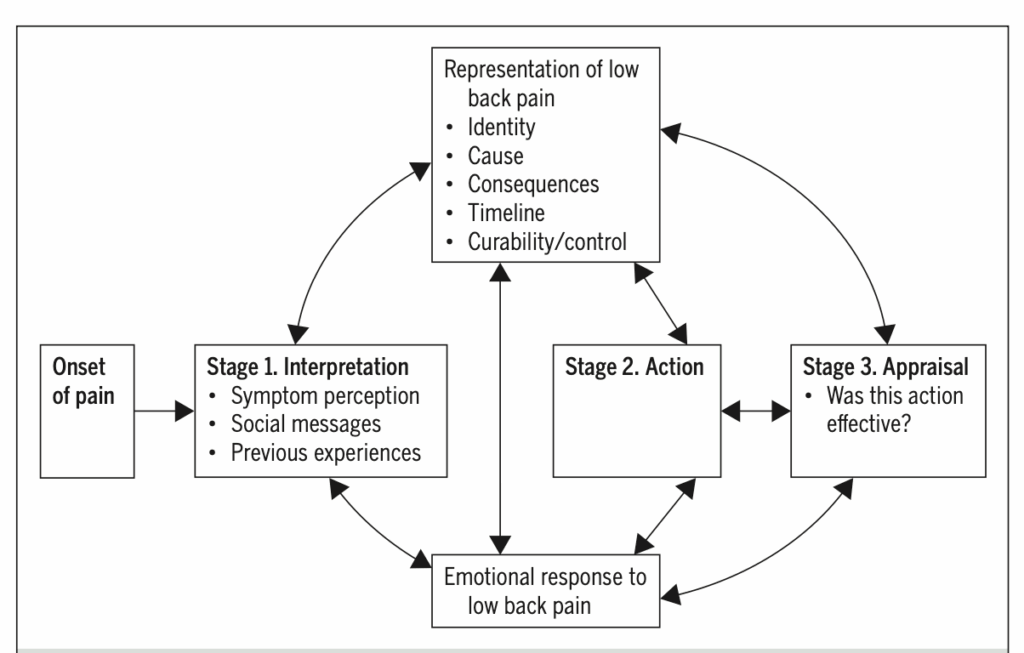
Articles like this found that many people after an injury or surgery believe their joints were “worn out” or “crumbling with age.” As a result, they often saw surgery as inevitable and skipped non-surgical options like rehab due to the emotional response to pain.
Many injured individuals develop ideas like:
- “Pain means something is damaged.”
- “Exercise might make it worse.”
- “I’ll never get back to normal again.”
These thoughts are not harmless. Instead they drive fear-avoidance behaviors, or making choices out of fear — like avoiding movement or skipping therapy — which prolongs pain and disability.
Some studies even show that fear and negative beliefs predicted poor recovery after spine surgery more than the actual physical findings.
The Fear-Avoidance Cycle, Back Pain, & Other Injuries
This harmful cycle often looks like this:
- Pain or injury occurs
- You believe the body is damaged
- You avoid normal movement
- Muscles weaken & joints stiffen
- Pain increases or plateaus
- You feel stuck & consider surgery
Because of this loop, your mindset—not just the injury—shapes your long term outcome.
How To Break the Cycle & Improve Recovery
Modern physical therapy focuses heavily on patient education and mindset. Thankfully, several approaches help people break free from fear-based patterns.
1. Pain Neuroscience Education
Learning that pain does not always mean damage helps calm the nervous system and reduces fear.
2. Building Confidence Through Loading
Many people are under-loaded in PT. When you gradually strengthen injured areas, your body becomes more resilient.
3. Graded Exposure to Movement
Slowly reintroducing feared movements teaches your body that it is safe to move again.
4. Addressing Mindset Before Surgery
Before considering surgery, working with a physical therapist first can help you build confidence, strength, and clarity.
Notably, research shows these strategies decrease pain and increase activity, even for people who previously believed they were “too injured” to improve.
Why Mindset Influences Surgical Decisions
Surgery can help when it’s truly needed. However, mindset often determines who chooses surgery—not just the severity of the injury.
Studies show:
- Patients with low confidence in recovery are more likely to quit rehab early
- People who fear movement often see surgery as the “only option”
- Negative beliefs predict worse surgical outcomes
For many musculoskeletal issues, movement is medicine, and mindset is the key that makes it work.
Words Matter From Clinicians
Surprisingly, negative beliefs often come from comments made by medical providers. When patients hear phrases like:
- “You’ve got the spine of an 80-year-old”
- “It’s bone-on-bone”
- “There’s a lot of wear and tear”
…it reinforces the idea that the body is failing — not healing.
Instead, providers should emphasize:
- The body’s strong ability to heal
- How adaptable muscles & tissues are
- The fact that pain ≠ damage
What You Can Do Today to Shift Your Recovery Mindset
If you’re dealing with pain or an injury, here are simple actions that can help:
1. Question negative beliefs
Ask yourself: Is it really true that I can’t improve? Often, those beliefs come from fear, not fact.
2. Learn about pain science
Understanding how pain works reduces fear and improves confidence.
3. Move, even in small ways
Safe movement sends powerful signals to your brain that your body is strong and capable.
4. Track your progress
Celebrate the small wins—every step forward counts.
5. Work with a physical therapist who listens
Choose a provider who empowers you rather than scares you.
Final Thought: The Body Responds to Belief
Physical therapy is not just physical. It’s mental. It’s emotional. And it’s highly influenced by how we view our bodies.
Saying “I have a bad back” might feel like the truth — but it’s often a belief, not a fact. And beliefs can be changed.
When you change your mindset, you don’t just change the story—you change the outcome.
